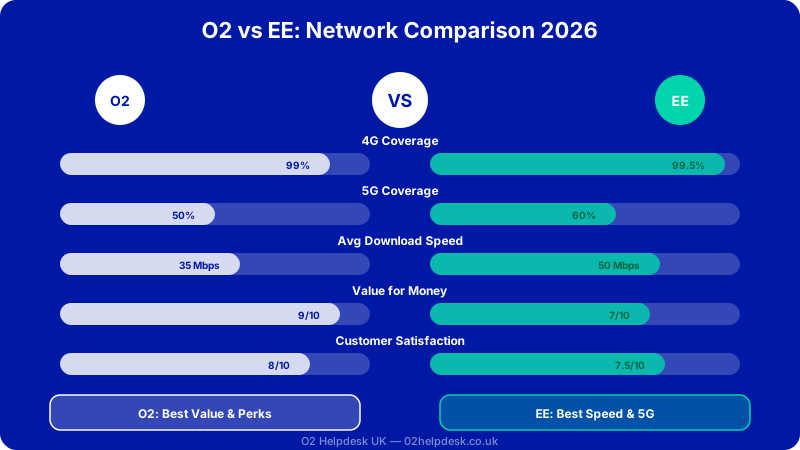
Choosing between O2 and EE is one of the most common dilemmas for UK mobile phone users. Both are major networks with millions of subscribers, strong brand recognition, and extensive infrastructure. But which one is actually better for you?
The answer depends on what matters most to you: coverage in your area, download speeds, monthly cost, international roaming, or customer support. In this detailed comparison, we look at every key factor so you can make an informed decision before committing to a contract.
Whether you are switching from another network, coming to the end of your current deal, or signing up for a mobile plan for the first time, this guide covers everything you need to know about how O2 and EE stack up against each other in 2026.
Network Coverage: O2 vs EE
Coverage is arguably the single most important factor when choosing a mobile network. A plan with unlimited data is worthless if you cannot get a signal where you live, work, or travel regularly.
O2 Coverage
O2 operates one of the largest mobile networks in the United Kingdom and covers a significant proportion of the UK population with 4G. The network has continued to invest in expanding its reach, particularly in rural and semi-rural areas where coverage gaps have historically been a problem. O2 uses a combination of frequency bands, including lower-frequency spectrum that travels further and penetrates buildings more effectively.
Many customers in suburban and rural locations report that O2 provides reliable indoor coverage thanks to its use of 800 MHz spectrum. However, like all networks, there are still areas where coverage is limited or patchy. If you are experiencing issues with your O2 signal, our guide on how to fix O2 signal problems offers practical solutions.
EE Coverage
EE, which is owned by BT Group, has long marketed itself as the network with the widest 4G coverage in the UK. Based on independent coverage data, EE does cover a slightly larger geographic area with 4G compared to O2, particularly in remote and rural regions. EE was the first UK network to launch 4G back in 2012, which gave it a head start in building out infrastructure.
EE also benefits from legacy infrastructure inherited from both T-Mobile and Orange when the two networks merged. This dual heritage means EE has a dense network of masts across the country.
Which Has Better Coverage?
In broad terms, EE has a slight edge in overall 4G geographic coverage, especially in very rural areas. However, the difference in population coverage is much smaller, and in many towns and cities both networks perform similarly. The best approach is to check coverage in your specific postcode using the official coverage checkers on each network's website before making a decision. You can use the Ofcom coverage checker to compare networks side by side. Your neighbour's experience on one network may be completely different from yours depending on the exact location of nearby masts and local geography.
Speed Comparison: O2 vs EE
Mobile data speeds affect everything from how quickly web pages load to the quality of video calls and streaming. Both O2 and EE deliver strong performance, but there are meaningful differences.
4G Speeds
Independent speed tests consistently indicate that EE tends to deliver faster average 4G download speeds compared to O2. Many users report that EE provides noticeably quicker downloads in urban areas where the network has invested heavily in capacity. O2's 4G speeds are competitive and perfectly adequate for everyday tasks like browsing, streaming, and social media, but peak speeds are generally lower than what EE achieves.
Upload speeds follow a similar pattern, with EE typically edging ahead. For most users, both networks provide more than enough speed for daily use, but if you regularly transfer large files or rely on cloud-based applications for work, the speed difference may be noticeable.
5G Speeds
5G is where things get particularly interesting. Both networks have been rolling out 5G across the UK, but their approaches and current reach differ. EE launched its 5G service slightly earlier and has generally been faster to expand to new locations. O2 has taken a more measured approach but has been steadily increasing its 5G footprint.
When you can connect to 5G on either network, the speeds are impressive. Users on both O2 and EE 5G regularly report download speeds that are many times faster than 4G, making activities like downloading large apps, streaming in ultra-high definition, and online gaming much smoother. The real-world 5G experience varies considerably depending on your exact location, the time of day, and how many other users are connected to the same cell.
Which Is Faster?
EE generally wins on raw speed for both 4G and 5G, based on the majority of independent testing. However, O2 offers speeds that are more than sufficient for the vast majority of everyday mobile tasks. If having the fastest possible connection is your top priority, EE has the edge. If you simply need a reliable and reasonably fast connection, both networks will serve you well.
Pricing Comparison: O2 vs EE
Price is often the deciding factor for customers choosing between O2 and EE. Both networks offer a range of SIM-only and pay-monthly plans at various price points, but there are notable differences in how they structure their pricing and what extras are included.
SIM-Only Plans
For SIM-only deals, both O2 and EE offer plans with varying amounts of data, from a few gigabytes up to unlimited. O2 tends to be slightly more affordable at several price points, particularly for mid-range data allowances. EE's SIM-only plans often carry a small premium, which the network justifies by pointing to its faster speeds and broader coverage.
O2 also offers flexible plans with shorter contract lengths or even 30-day rolling contracts, which can be attractive if you do not want to commit to a long-term deal. EE offers similar flexibility on some plans, though the pricing structure may differ.
Pay Monthly with a Phone
When you bundle a handset with your plan, the monthly cost depends on the phone you choose, the data allowance, and the contract length. Both networks offer the latest smartphones from manufacturers like Apple, Samsung, and Google.
O2 uses its Refresh system, which splits your contract into an airtime plan and a device plan. This means you can pay off your phone early and upgrade sooner if you wish. EE offers a similar structure. For a deeper look at how O2's system works, see our guide to O2 Refresh explained.
In general, the total cost of ownership over a contract period is broadly comparable between the two networks for the same phone and data allowance. It is always worth comparing the exact monthly cost and total cost over the contract term rather than just looking at the headline monthly price.
Hidden Costs and Price Rises
Both O2 and EE include annual price increase clauses in their contracts, typically linked to inflation or a fixed percentage. These mid-contract price rises can add a meaningful amount to your bill over a 24 or 36-month contract. Before signing up, make sure you understand the price increase policy and factor it into your total cost calculation. If you spot an unexpected increase on your statement, our article on understanding your O2 bill can help you make sense of the charges.
Which Offers Better Value?
O2 is often the more affordable choice, particularly on SIM-only plans and for customers who value flexibility. EE commands a small premium but delivers faster speeds in return. The best value depends on what you need: paying less each month or getting maximum performance. Both networks regularly run promotional offers, so it pays to check current deals before committing.
Customer Service: O2 vs EE
When something goes wrong with your mobile service, the quality of customer support matters enormously. Both O2 and EE offer multiple channels for customer service, including phone support, online chat, social media, and in-store help.
O2 Customer Service
O2 has generally received favourable reviews for its customer service compared to other UK networks. The network offers support through its app, website live chat, social media channels, and a community forum where other customers and O2 staff can help with queries. O2 also has a large network of high-street stores where you can get face-to-face help.
Many customers report that O2's phone support is reasonably accessible, though wait times can vary depending on the time of day and how busy the lines are. O2's community forum is particularly useful for common issues, as many questions have already been answered by experienced users.
EE Customer Service
EE offers similar customer service channels, including phone support, online chat, and an extensive network of stores (benefiting from BT's retail presence). EE has invested in improving its customer service in recent years and has introduced features like call-back options to reduce time spent on hold.
Customer satisfaction surveys have shown mixed results for EE over the years. Some customers praise the network's technical support, while others report frustration with long wait times or difficulty resolving complex billing issues. This is a common theme across all major UK networks, not just EE.
Which Has Better Customer Service?
Based on various customer satisfaction surveys and independent reviews, O2 tends to score slightly higher for overall customer service satisfaction. However, individual experiences vary widely, and both networks have their share of positive and negative reviews. If customer service is a priority for you, it is worth looking at recent reviews and considering which support channels you are most likely to use.
International Roaming: O2 vs EE
If you travel abroad regularly, roaming policies can have a significant impact on your mobile costs. Since the UK left the EU, the roaming landscape has changed, and both O2 and EE have adjusted their policies.
O2 Roaming
O2 includes roaming in a number of European destinations within certain plans, allowing customers to use their UK allowance abroad at no extra cost, subject to fair usage limits. For destinations outside Europe, O2 offers travel bolt-ons that provide set amounts of data, calls, and texts for a daily or weekly fee.
The specifics of O2's roaming policies depend on when you took out your contract and which plan you are on. For a complete breakdown, read our comprehensive O2 roaming guide which covers everything from EU roaming to using your phone further afield.
EE Roaming
EE offers roaming in a large number of destinations and includes EU roaming in many of its plans, though some newer plans charge a daily roaming fee for use in European countries. EE's roaming coverage extends to a wide range of countries outside Europe through its various travel passes and add-ons.
EE has introduced tiered roaming, with different daily rates depending on the destination. This can make costs predictable, but it also means that heavy users abroad may face higher charges than they would on a plan with inclusive roaming.
Which Is Better for Roaming?
The answer depends heavily on your specific plan and where you travel. Both networks offer competitive roaming options, but the details matter. O2 tends to offer more straightforward inclusive roaming on many plans, while EE's approach can be more complex with its tiered daily fees. If you travel frequently, compare the roaming policies of the specific plans you are considering, and always check fair usage caps to avoid unexpected charges.
5G Availability: O2 vs EE
5G is the next generation of mobile connectivity, and both O2 and EE are investing heavily in their 5G networks. However, 5G availability remains limited compared to 4G, and the rollout is concentrated in major cities and towns.
O2 5G Rollout
O2 has been expanding its 5G network steadily and now covers parts of numerous UK cities and large towns. The network has committed to continued investment in 5G infrastructure, and coverage is expected to grow significantly over the coming years. O2 includes 5G access at no extra cost on compatible plans, which means you do not need to pay a premium to access the faster network where it is available.
EE 5G Rollout
EE has generally been ahead in the 5G rollout race, having launched earlier and expanded to more locations. As of early 2026, EE's 5G network reaches a larger number of towns and cities compared to O2. Like O2, EE includes 5G on compatible plans without an additional charge.
Which Has Better 5G?
EE currently has the broader 5G network in terms of geographic reach and number of locations covered. If having access to 5G right now is important to you, EE is the safer bet, particularly if you live outside a major city. However, O2 is closing the gap, and both networks continue to expand rapidly. In many major cities, both networks now offer 5G coverage in central areas.
Extras and Perks
Beyond the core mobile service, both O2 and EE offer additional perks that can add value to your plan.
O2 Extras
O2 is well known for its Priority rewards programme, which gives customers access to exclusive offers, early access to event tickets, and regular freebies. O2 Priority has been a popular feature for years and offers genuine savings on dining, entertainment, and shopping. O2 also offers extras like Disney+ or Amazon Prime Video as add-ons with certain plans.
EE Extras
EE offers its own set of perks, including inclusive subscriptions to services like Apple TV+, Xbox Game Pass, or other entertainment platforms depending on the plan tier. EE also provides access to its Smart Benefits programme on certain plans, allowing customers to choose from a selection of premium add-ons.
Which Has Better Extras?
This is largely a matter of personal preference. O2 Priority is a well-established programme with a loyal following, and the event ticket pre-sales are genuinely useful for music and sports fans. EE's bundled entertainment subscriptions can represent good value if they include services you would pay for anyway. Consider which extras align with your interests when comparing plans.
Which Network Is Better for Different Use Cases?
There is no single "best" network that suits everyone. The right choice depends on your priorities and how you use your phone. Here is a breakdown by use case:
Best for Budget-Conscious Users
O2 tends to offer better value at lower price points, particularly on SIM-only plans. If keeping costs down is your primary concern, O2 is often the more affordable option. Additionally, O2's flexible contract options give you more freedom to switch if you find a better deal later.
Best for Speed and Performance
If you want the fastest possible mobile data speeds, EE is generally the stronger choice. Whether on 4G or 5G, EE consistently delivers higher average speeds in independent tests. This makes EE a good option for professionals who rely on mobile data for work, or for anyone who streams a lot of high-quality video on the go.
Best for Rural Coverage
EE has a slight advantage in rural areas thanks to its broader geographic coverage. If you live or spend significant time in remote parts of the UK, EE may provide more reliable service. That said, both networks have invested in rural coverage improvements, and O2 performs well in many rural locations. Always check the coverage map for your specific area before deciding. If you are having trouble with coverage, our article on resolving O2 signal issues may help.
Best for International Travellers
Both networks offer competitive roaming options, but the best choice depends on your specific plan and travel destinations. O2's inclusive European roaming on many plans keeps things simple, while EE's tiered approach can be more or less expensive depending on usage. For detailed advice on using your phone abroad with O2, check our roaming guide.
Best for Families
Both O2 and EE offer multi-line discounts and family-friendly plans. O2's flexible contracts can be useful for families with children who may need to change plans as their usage evolves. EE's family plans sometimes include shared data or discounts for additional lines. Compare the specific family offers available at the time you are shopping.
Best for Entertainment Lovers
If bundled entertainment subscriptions matter to you, both networks have compelling offers. O2 Priority provides ongoing rewards and exclusive experiences, while EE's plan-inclusive streaming subscriptions can save you money on services you already use. Consider which entertainment services you value most when making your choice.
Switching Between O2 and EE
Switching networks in the UK has become much easier thanks to the text-to-switch process. If you are on a pay-monthly contract and want to move from O2 to EE (or vice versa), you can request a PAC code by texting PAC to 65075 from your current network. This code allows you to keep your existing phone number when you switch.
Before switching, make sure your current contract has ended or that you are prepared to pay any early termination fees. You should also check that your phone is unlocked and compatible with the new network. If you are interested in upgrading your phone at the same time, our guide on O2 upgrade eligibility explains when and how you can upgrade.
Final Verdict: O2 vs EE
Both O2 and EE are excellent mobile networks that serve millions of satisfied customers across the UK. There is no clear-cut winner because the best choice depends entirely on your individual needs and circumstances.
Choose O2 if: you want better value for money, appreciate flexible contracts, enjoy loyalty rewards through O2 Priority, and are happy with solid (if not the fastest) speeds. O2 is a strong all-round choice that balances performance and affordability.
Choose EE if: you prioritise speed and performance above all else, need the widest possible coverage in rural areas, want access to 5G in more locations right now, or value bundled entertainment subscriptions. EE commands a small price premium but delivers top-tier network performance.
Whichever network you choose, always compare the latest deals before signing up, as both O2 and EE frequently run promotions that can significantly reduce costs. And remember to check coverage in your specific area, because the best network on paper is only the best network for you if it works reliably where you need it most.
Need Help Choosing Between O2 and EE?
Our independent advisors can help you compare plans, check coverage in your area, and find the best deal for your needs.